
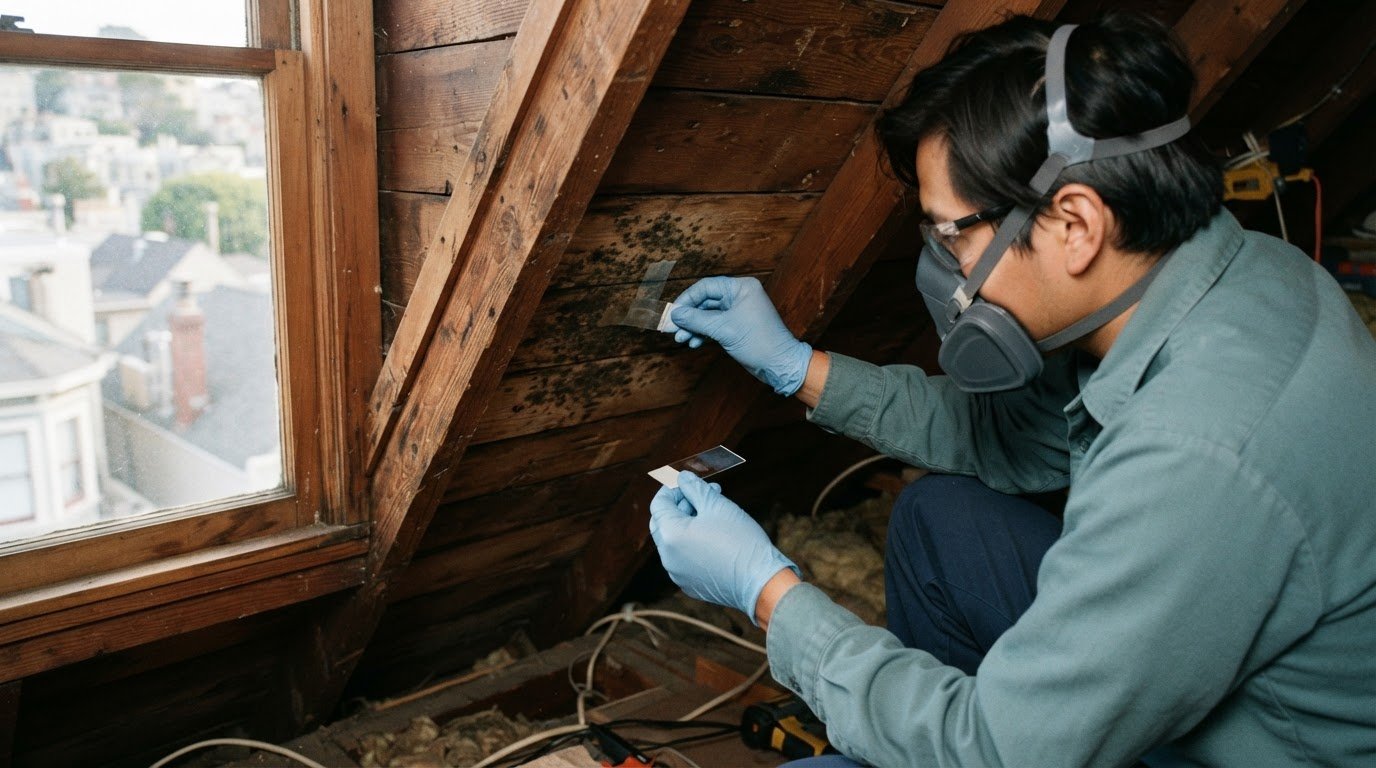
Mold remediation is more than removing visible growth: the process must address the moisture behind it. Independent mold remediation specialists in SF begin with an inspection, then use testing when it can help clarify the extent or location of a concern. Indoor air samples are compared with an outdoor sample as a baseline, and clearance testing after treatment can assess the affected area before rebuilding.
Finding a musty smell, staining, or suspected mold at home can raise questions about what to do first. A professional inspection helps distinguish visible signs from moisture conditions and determine whether testing would help answer a specific question.
This article explains how mold inspections and testing work, what remediation involves, and how to reduce the chance of mold returning in San Francisco homes. It also covers how an environmental investigation can help identify conditions associated with a mold concern.
Key Takeaways
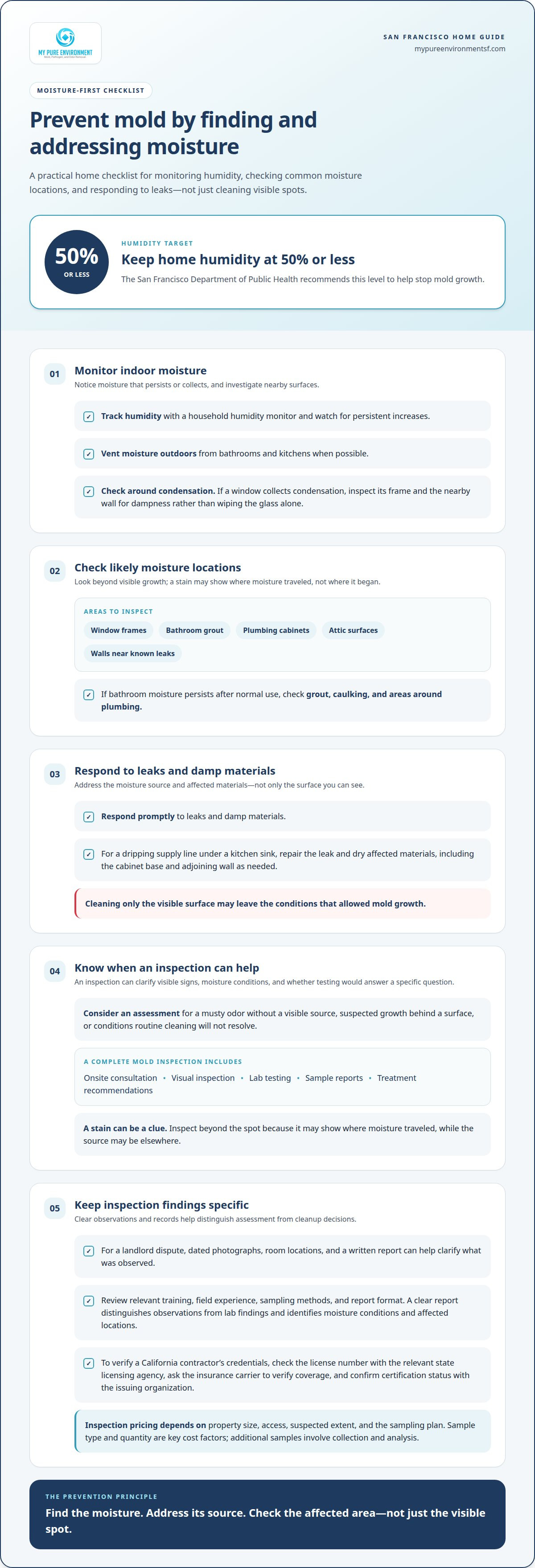
- San Francisco’s Department of Public Health recommends keeping home humidity at 50% or less to help stop mold growth.
- Learn how indoor air samples, compared with an outdoor baseline, can help assess a mold concern.
- Understand why sampling methods vary depending on where mold may be and what needs to be examined.
- See how a careful remediation process addresses visible mold and the moisture conditions that can contribute to its return.
- Find out how inspection and documentation can help clarify mold concerns in landlord disputes or insurance claims.
How do you prevent mold from growing in San Francisco homes?
In San Francisco, prevention starts with managing indoor moisture and responding to leaks. Mold grows when moisture is present, so an inspection should look beyond visible spots. An inspector may examine window frames, bathroom grout, plumbing cabinets, attic surfaces, and walls near known leaks. A stain can show where moisture traveled, even if the source is elsewhere.
Humidity is one practical condition to monitor. The San Francisco Department of Public Health recommends keeping home humidity at 50% or less to help stop mold growth. Vent bathroom and kitchen moisture outdoors when possible, and use a household humidity monitor to notice persistent increases. If condensation collects on a window, inspect the frame and nearby wall for dampness rather than wiping the glass alone.
A mold inspection in San Francisco or surrounding regional communities can help identify conditions that routine cleaning won’t resolve. An inspector examines the property, notes visible growth and moisture indicators, and considers whether sampling would answer a specific question. Testing can be useful for a musty odor without a visible source or suspected growth behind a surface. My Pure Environment SF’s Complete Mold Inspection includes an onsite consultation, visual inspection, lab testing, sample reports, and treatment recommendations.
Respond promptly to leaks and damp materials. For example, a dripping supply line under a kitchen sink can wet the cabinet base and adjoining wall. Repairing the leak and drying affected materials addresses the moisture source; cleaning only the visible surface may leave the conditions that allowed growth. In a bathroom, check grout, caulking, and areas around plumbing if moisture persists after normal use.
An independent inspection can be useful when a homeowner wants an assessment separate from remediation work. The inspector documents observations and test results, which the homeowner can use to consider next steps. For a landlord dispute, dated photographs, room locations, and a written report can help clarify what was observed. An inspection alone doesn’t repair a leak or remove affected material.
To verify a contractor’s credentials in California, request the license number and check it with the relevant state licensing agency. Ask the insurance carrier to verify coverage. For certifications, confirm the credential and its current status with the issuing organization.
Qualifications matter because an inspection involves more than recognizing discoloration. Review the inspector’s relevant training, field experience, sampling methods, and report format. Ask how the report distinguishes direct observations from laboratory findings, and whether it identifies moisture conditions and affected locations. A clear report provides specific findings rather than relying on a broad label.
Inspection pricing depends on property size, access, suspected extent, and the selected sampling plan. Additional samples can affect the scope, since each one involves collection and analysis. The price depends on the case and is provided after a quote request; sample type and quantity are key cost factors. These details help explain what an inspection includes without treating one property’s scope as a standard package.
Independent mold remediation specialists serving San Francisco may inspect and test homes, perform remediation, or offer both services. A separate inspection can distinguish assessment from the cleanup decision. My Pure Environment SF provides mold testing, inspection, and remediation, with findings used to guide appropriate next steps.
How is a mold test done?
A mold test starts with a defined concern, such as a persistent odor or visible growth. The inspector selects samples based on the location and question being assessed.
Post-Remediation Clearance Testing
After remediation, testing can assess the treated area and document conditions before rebuilding. A plan may include indoor air samples compared with an outdoor sample as a baseline. Results should be considered alongside sampling locations, inspection observations, and the work completed. A clear report connects each finding to the area tested rather than treating one sample as a verdict for the entire home.
Independent Testing and Conflict Avoidance
Independent testing separates assessment from the decision to perform remediation. The inspector documents observed conditions and sampling results, while the property owner can use that information to determine next steps. This separation can help when a landlord, tenant, or insurer needs a record of findings. Look for a report that identifies the question, locations, methods, and results without turning observations into unsupported conclusions.
Sampling Strategies and Mold Testing
Sampling should answer a specific question. An inspector may collect an indoor air sample and compare it with an outdoor baseline when assessing airborne particles. A surface sample can examine a visible spot, while targeted cavity sampling may address suspected growth behind a finish. The sampling plan should state where each sample came from and how its result relates to the concern.
During mold testing, the inspector records the concern and examines relevant rooms and materials. Moisture readings and visible conditions help determine where sampling may be useful. Testing supports an assessment, but results must be interpreted in context. A musty odor near a water-damaged cabinet, for instance, calls for attention to both the odor and the moisture source.
Drinking water testing addresses a separate question from indoor mold testing. A mold sample from a wall or air doesn’t establish whether tap water is safe to drink. If water quality is the concern, the sample and analysis must address the water itself; mold testing alone cannot answer that question.
Mold specialists focus on inspection, sampling, and mold-related remediation. Restoration companies may handle broader property recovery, while general contractors focus on construction work. The right scope depends on whether the immediate need is identifying mold conditions or completing other building work. My Pure Environment SF focuses on mold testing, inspection, and remediation.
To compare San Francisco estimates, review the inspection scope, sample locations, testing methods, and report deliverables side by side. Be cautious of a proposal that recommends extensive work without explaining the findings behind it. For a focused assessment, mold testing and inspection can help clarify observed conditions and guide the next decision.
What Is the Mold Remediation Process?
A remediation project begins by assessing the visible mold problem, moisture conditions, and affected materials. The findings guide containment, removal, cleaning, and follow-up checks. For example, mold near a window may require investigating condensation or water entry before deciding how to treat nearby materials.
The assessment should describe the presence and location of suspected growth, visible damage, and likely moisture pathways. In an apartment, that may mean documenting a bathroom ceiling, a wall beside plumbing, or a damp closet. A written record helps distinguish observed conditions from assumptions. A certified credential may indicate relevant training, but the report should still explain its methods and findings clearly.
California and San Francisco requirements can depend on the housing circumstances and issue involved; no single inspection report resolves every tenant-notification or repair question. For a landlord dispute or insurance claim, preserve dated photographs, written communications, inspection findings, and records of reported leaks. A report can document conditions, while applicable legal duties depend on the specific situation.
Homeowners and renters in San Francisco apartments should record where and when they see growth, staining, or recurring dampness, then notify the responsible property contact in writing. Avoid covering a suspected area before documenting it. If water damage continues, note its location and changes; those details help an assessment determine whether the problem is isolated or connected to a broader moisture source.
Indoor air quality assessment considers more than a single visible spot. An inspector can connect room observations, odor concerns, moisture conditions, and sampling results, then recommend steps tied to those findings. For example, a musty odor in a bedroom beside a damp closet may call for inspecting both the closet materials and adjoining wall. Recommendations should identify the concern and the next practical action.
Environmental assessment also considers how conditions may change. Monitoring can document whether a damp area remains wet, a suspected source persists, or affected locations change after repairs. In a commercial space, the assessment may consider work areas and building materials; in a home, it may focus on living spaces, bathrooms, or attic surfaces. The scope follows the property and observed conditions.
Untreated mold and moisture can damage building materials, including drywall, wood, and finishes, especially if dampness continues. Potential health concerns vary among occupants, and a building inspection cannot diagnose an individual’s symptoms. An assessment can document the presence and extent of a mold problem, while remediation addresses affected areas and moisture conditions identified in the work plan.
Air, cavity, swab, slide, and bulk sampling
Each sampling method answers a different question about possible mold contamination. A trained inspector selects samples based on the property, visible conditions, and suspected location. The goal is relevant evidence, not collecting every possible sample. For example, an air sample can assess airborne particles, while a swab examines a specific surface.
Air samples capture airborne particles from a selected indoor location. An outdoor sample can provide a baseline for comparison. The inspector records where each sample was collected and considers room conditions during collection. One air result describes that sampling moment and location; it doesn’t map every hidden area or explain the moisture source.
Cavity samples are used when a concern involves a concealed space, such as inside a wall or ceiling. The inspector identifies the suspected cavity and uses an access point to collect material or air from within it. This can help assess a hidden area when staining or an odor suggests a problem behind the finished surface. The report should distinguish cavity findings from nearby room samples.
Swab and slide samples focus on visible surfaces. A swab collects material from a selected area, such as a small patch on a windowsill. A slide can lift a sample from a surface for microscopic examination. Each method relates to its collection point, so the report should identify the surface and location. A tiny sample may not represent a larger area.
Bulk samples involve collecting a piece of material, such as drywall or insulation, for analysis. This method can help examine a specific building component when surface sampling would not address the concern. The inspector records the material and exact location, because a result from one piece doesn’t automatically describe every similar material throughout the property.
Choosing among these methods depends on what the inspection needs to determine. Visible growth may call for a surface sample; suspected hidden contamination may require a cavity or bulk sample. If the question concerns airborne particles, air sampling may be more relevant. A trained inspector should explain the purpose of each sample and how its location relates to the concern.
Results gain meaning from context. The report should connect laboratory findings with the inspected area, visible conditions, and moisture observations. A surface result from a bathroom ceiling, for example, should not be treated as a whole-home assessment. Sample selection, collection notes, and clear location labels help readers understand what was tested and what the evidence supports.
Mold and environmental investigation services
A mold investigation looks for conditions behind visible growth, not just the discolored surface. Moisture sources, building materials, ventilation, and room use can shape the assessment. Mold remediation addresses affected areas; identifying the moisture source helps guide prevention and follow-up.
Investigators begin with a walk-through of relevant rooms and building features. They may trace staining near a window toward the frame, inspect plumbing beside a bathroom wall, or examine attic surfaces below a roof junction. These observations help connect a mold concern with potential moisture pathways. The report should separate direct observations from possible explanations.
Timing matters after water enters a building. Mold colonies can establish within 24-48 hours after moisture is present. That makes the sequence of events useful: when a leak began, which materials became wet, and whether drying followed. A timeline can help focus an inspection on the most affected locations, such as a cabinet base after a plumbing leak.
Sampling may support an investigation when a specific question remains. An indoor air sample can be compared with an outdoor baseline; a surface sample can examine a visible area. The sample’s location and purpose matter. A bathroom ceiling sample can address that surface, but it cannot represent every room or identify a leak by itself.
Construction details can influence where moisture travels. A stain beside a window may relate to the frame, wall assembly, or indoor condensation. Dampness near a pipe may involve a concealed connection. An investigation records potential pathways without treating an untested possibility as a confirmed source. That distinction helps property owners understand what findings support and what requires further examination.
Environmental investigation also considers how a concern affects indoor conditions. Odor, visible damage, damp materials, and room use provide context for interpreting observations or sample results. In a home, an attic and bathroom may need different inspection approaches. In a commercial property, relevant areas depend on the reported concern and building layout.
Once the source and affected locations are clearer, findings can guide decisions about mold remediation. A report can identify where growth was observed, what moisture conditions were noted, and which questions remain relevant. Assessment is distinct from construction or rebuilding work, which is outside My Pure Environment SF’s mold-focused service scope.
For a suspected mold concern, request an environmental mold assessment to clarify the observations, sampling needs, and next steps for your property.
My Pure Environment SF
My Pure Environment SF helps San Francisco property owners investigate suspected mold and plan appropriate next steps. Its Complete Mold Inspection includes an onsite consultation, visual home inspection, lab testing, reports on each sample, and treatment recommendations. Mold Remediation addresses affected areas using patented dry fog technology. The company also provides Indoor Air Quality Improvement and Bathroom Mold Removal.
Turn to My Pure Environment SF when you need clearer information about a mold concern, testing, or remediation. The findings can help guide decisions about addressing affected areas and reducing indoor air quality concerns. For a mold issue in your home, contact My Pure Environment SF to discuss your concerns and the appropriate next step.
Take the Next Step Toward a Clearer Plan
A mold concern can leave you weighing what to address first. Start by turning observations into a plan that fits your property, rather than making decisions from a stain or odor alone. Independent mold remediation specialists in SF can help connect assessment findings with a practical path forward.
My Pure Environment SF can help with mold concerns through testing, remediation, and indoor air quality improvement. If you’re ready to discuss what you’ve observed and the support that may fit, contact My Pure Environment SF.
Clear information can make the next decision feel more manageable. Start with the concern that matters most in your home and take it one considered step at a time.
Frequently Asked Questions
Can mold grow behind drywall?
Yes, mold can grow behind drywall when moisture reaches the paper facing or nearby materials. A plumbing leak, roof leak, or persistent condensation can create concealed dampness. Clues such as peeling paint, a musty odor, or a soft wall may warrant inspection, but they don’t identify what’s behind the surface. Avoid cutting into a suspected area without understanding the conditions, since opening it can disturb affected material.
How long does it take to get rid of mold in a house?
There isn’t one timeline for every home; the scope depends on affected materials, access, and moisture conditions. A small, accessible area differs from growth inside a wall or across several rooms. The moisture source must also be addressed, and damp materials may need time to dry. Ask for a project plan that separates assessment, remediation, drying, and any later rebuilding, so you know what each stage involves.
How much does it cost to get rid of mold?
Mold removal costs depend on the case and are provided after a quote request. Key factors include the affected area, material type, access, sampling needs, and the moisture conditions involved. For example, treating an accessible surface differs from addressing suspected growth inside a wall. A useful estimate explains the work included and how the inspection findings support its proposed scope, rather than relying on a broad price range.
Is mold damage covered by insurance?
Coverage depends on the specific policy, reported cause, and circumstances of the damage. Review the policy language and contact your insurer about the claim process before assuming remediation is covered. Keep dated photos, records of leaks, and relevant inspection findings together. Documentation showing where damage appeared and when it was reported can help explain the situation, but the insurer determines coverage under the policy.
How much does mold remediation cost in San Francisco, by project size and mold type?
San Francisco remediation costs vary with the project scope, not simply the apparent mold type. A quote can account for the affected locations, material condition, accessibility, sampling, and moisture source. Visible color alone doesn’t establish the mold species or determine the work required. Ask for an estimate that links proposed tasks to documented findings, such as the specific rooms and materials included, without treating a single sample as a whole-home assessment.
Should I hire a separate mold inspector before choosing a remediation specialist?
A separate inspector can be useful when you want an assessment independent of the remediation decision, especially in a landlord dispute or insurance claim. It isn’t the only possible approach. Consider whether you need a separate written record, who will interpret test results, and how the findings will inform the work plan. Preserve reports and photographs so later decisions can be traced to the conditions documented at the property.
What steps should a professional mold remediation project include?
A professional project should begin by defining affected areas and the moisture conditions involved. The work plan then identifies containment and removal procedures appropriate to the materials, followed by cleaning and checks of treated areas. For example, a plan for a water-damaged cabinet should address the cabinet and the condition that kept it damp. The final documentation should describe completed work and any follow-up assessment before rebuilding proceeds.
How long does mold remediation take, and what affects the timeline?
The timeline depends on how much material is affected, whether growth is concealed, and how easily the area can be accessed. Moisture source correction and drying can also shape the schedule. A bathroom surface concern may involve a different scope than affected materials behind a wall. Before work begins, request a sequence that identifies assessment, treatment, drying, and any clearance testing, so you can understand what may affect each stage.
